
Complete Introduction to Primary & Secondary Batteries (Commercial Edition for Lithium Industry, Including English Terms, Principles, Categories, Pros & Cons, Applications)
I. Basic Definitions & English Terminology
- Primary Battery (Non-rechargeable Battery) The chemical reaction is irreversible. Once the energy is exhausted, it cannot be recharged and must be discarded after single use.
- Secondary Battery (Rechargeable Battery / Accumulator) The oxidation-reduction reaction is bidirectionally reversible. Applying an external reverse current for charging can restore the chemical activity, allowing hundreds to thousands of charge/discharge cycles.
II. Comparison of Core Working Principles
1. Primary Battery
Discharging: oxidation at the negative electrode, reduction at the positive electrode, converting chemical energy to electrical energy;
Once reactants are consumed, the reaction completely stops; Forcible charging may cause leakage, swelling, fire or explosion, and cannot be repaired.
2. Secondary Battery
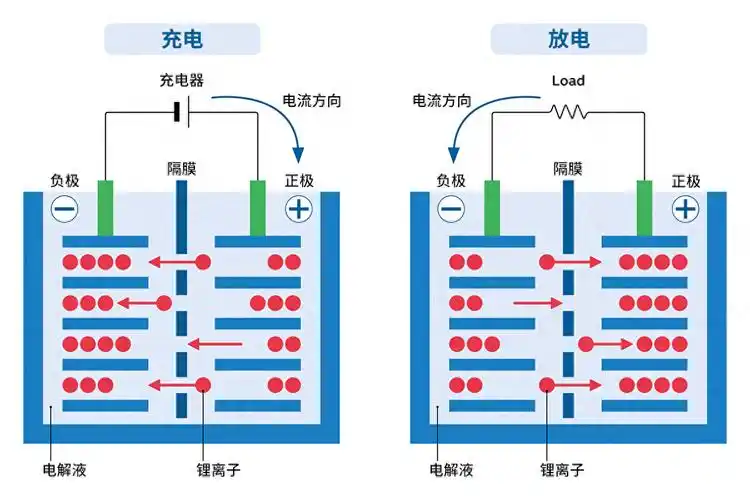
- Discharging (supplying power externally): chemical energy → electrical energy (same as primary battery)
- Charging (restoring stored energy): external power source applies reverse voltage, reducing the discharge products back to original electrode materials, storing electrical energy as chemical energy; combined with a BMS protection board to manage voltage, current, and temperature, preventing overcharge and overdischarge damage to the cell (electric tricycle lithium battery).
III. Main Subcategories
(A) Primary Batteries (Single-use)
- Carbon-Zinc Manganese Battery (regular AA/AAA dry cells) Extremely low cost, low capacity; used in remote controls, clocks, flashlights.
- Alkaline Zinc-Manganese Battery (Alkaline) Capacity 3~5 times that of carbon-zinc, stable discharge; toys, mice, blood pressure monitors.
- Lithium Metal Primary Battery (3V Lithium Manganese Coin/Cylindrical) Very low self-discharge, storage life 5~10 years, wide temperature range; car keys, motherboard CMOS, smoke alarms, medical equipment, military devices.
- Zinc-Air Battery High current, low cost; hearing aids, portable emergency power.
- Silver Oxide Button Cell Stable voltage; watches, precision calculators.

(B) Secondary Batteries (Rechargeable)
- Lead-acid Battery Lowest cost, high current output; automotive starting, old-style electric tricycle batteries, backup storage.
- Ni-MH Battery (Nickel-Metal Hydride) Cadmium-free; older digital devices, power tools.
- Lithium-ion Battery (Mainstream)
- Ternary lithium: high energy density, smartphones, laptops, small portable power stations;
- Lithium Iron Phosphate (LFP): safe, long cycle life, moderate cost; electric tricycle power batteries, large-scale energy storage, photovoltaic off-grid power.
IV. Key Performance Pros and Cons Comparison
Primary Battery
✅ Advantages
- Simple structure, no charging circuit/BMS needed, maintenance-free;
- Extremely low self-discharge, does not lose power during long-term storage;
- Low unit purchase price, easy installation in small devices;
- Stable low-temperature discharge performance superior to cheap secondary batteries.
❌ Disadvantages
- Single use only; overall cost extremely high for long-term use;
- Not suitable for high-power, frequently discharging scenarios;
- Disposables generate large amounts of solid waste, putting pressure on environmental recycling.
Secondary Battery
✅ Advantages
- Cycles from hundreds to 3,000 times; life-cycle cost lower for frequent use;
- Supports continuous high-power discharge, suitable for electric vehicles and energy storage;
- Can be combined with photovoltaic or grid for cyclic energy storage, ideal for off-grid villages and factory transfers;
- Metal resources recyclable, high circular economy value.
❌ Disadvantages
- Higher initial purchase cost;
- Must be paired with charging equipment and BMS protection;
- Self-discharges when idle for long periods, requiring periodic recharging;
- Inferior cells may catch fire under high temperature or overcharge, demanding high safety management.
V. Typical Application Scenarios
Suitable Scenarios for Primary Batteries
Low-power, infrequent use, small devices where charging is inconvenient:
Household remote controls, clocks, smoke alarms, portable medical detectors, car remote keys, outdoor small monitoring equipment.
Suitable Scenarios for Secondary Batteries (Core Market)
- Transportation: electric tricycles, electric vehicles, motorcycles, automotive energy storage;
- Portable Energy Storage: outdoor camping power stations, rural emergency backup power, photovoltaic off-grid storage;
- Industrial Applications: factory transfer vehicles, equipment backup power, agricultural machinery power;
- Consumer Electronics: smartphones, laptops, power tools;
- Supplementary Improvement Solutions: paired with supercapacitor modules to absorb regenerative braking energy on downhills, protecting the controller from burning out.
VI. Industry Summary
- For low-power, long-standby devices, choose primary batteries, emphasizing one-time low cost;
- For vehicle power, energy storage, and high-frequency high-power equipment, secondary lithium-ion batteries (LFP optimal) must be used; they are rechargeable and the long-term cost is far lower than single-use batteries;
- For heavy-duty electric tricycles in mountainous regions of Vietnam, a LFP secondary battery with BMS + supercapacitor buffer is the standardized solution to prevent controller burnout from downhill regenerative braking.